


When choosing a plush blind box manufacturer in China there are four key things to verify before you sign off on them. The plush must be made from good quality materials and crafted well. The plush must also comply with any safety standards for the country that the product is intended to be sold in. There must be a quality control process that you can audit. And the minimum order quantity must fit with your first order. If you get these four right then the rest is relatively straightforward. But if you miss one of them then you could end up with a container of product that fails to clear customs, doesn’t look anything like the sample, or sells out in a week and can’t be reordered.
What to Verify Before You Choose a Plush Blind Box Manufacturer
Material and Craft, Where These Products Live or Die
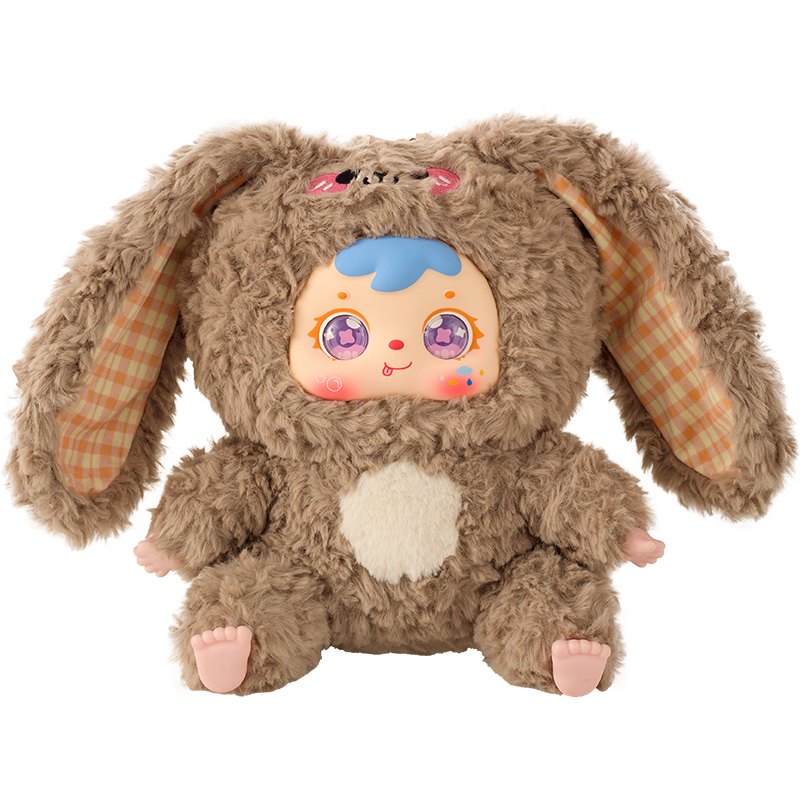
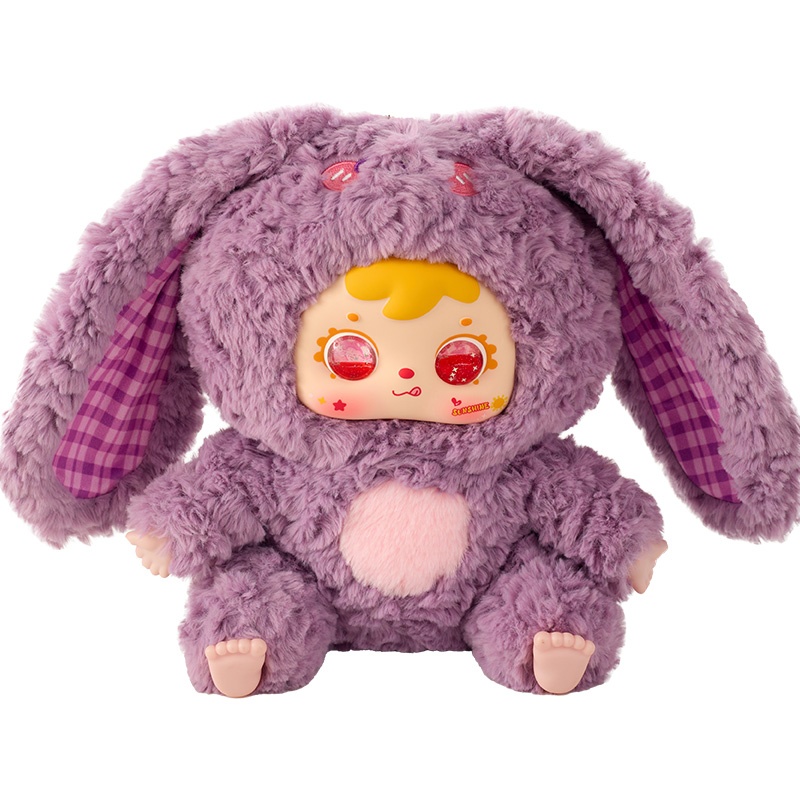
Many vinyl-face plush blind box figures are made up of a soft plush body and a molded plastic face. Depending on the design of the figure, the body may be made up of micro-plush or faux-rabbit plush fabric which is stuffed with polyester fiberfill. The face on the other hand is typically made from PVC or ABS and it is this combination of materials that makes the figure different from normal plush toys and where most of the quality problems occur.
Even a well designed item can look bad if the seam where the face is attached to the body of the plush toy is not done well. Check the stitching. Also check the toy for proper stuffing. Even the best designed item can sag if not stuffed evenly. To keep a standing or sitting character upright, pellets can be put in the base of the toy. Ask your factory how this is done.
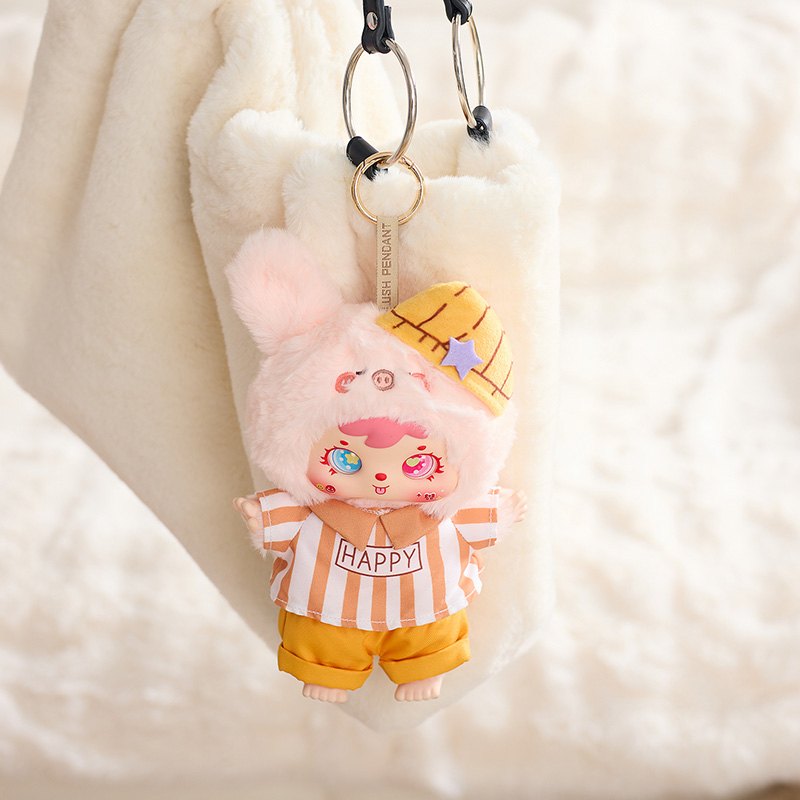
The vinyl-face-plus-plush objects by Samuel in this show range from small pendant versions of these characters to the larger versions of them which are meant to be collectibles – including the 400% Crown Rabbit sitting on a desk as a single sculpture of the same construction as the smaller collectible versions.
Safety and Compliance Requirements That Matter for Export
Key compliance requirements for plush toys exported from China to be sold in various countries need to refer to the country’s relevant requirements. In China, such toys are required to comply with relevant GB 6675 standards while CCC requirements apply to product categories. In the EU, plush toys must comply with relevant EU toy safety requirements and bear the CE marking. In the US, children’s toys must comply with applicable CPSC requirements, including ASTM F963 where applicable. Covered children’s products also require a Children’s Product Certificate (CPC). In Australia, plush toys must comply with the mandatory safety standards for toys as set out for each requirement.
A factory with extensive experience supplying to various markets should be able to supply relevant test reports and other compliance documents to assist the buyer or importer in obtaining the necessary certification to comply with the relevant standard.
Also check the materials and components for the relevant chemical tests in the destination country. These can include limits on heavy metals, lead, phthalates etc. requested reports should be available from the factory. An experienced factory should verify material compliance early in the development process rather than leaving it until the last minute, even if it has previously shipped products to regulated markets.
A Quality Control Process You Can Audit
"Good quality control" is something every single factory claims to have. But good quality control has checkpoints for heaven’s sake. That means for a plush line for example: incoming quality control for the fabrics, in-process quality control for the sewing and stuffing parts, and finally a final quality check before shipping out. For the final quality check, AQL sampling is often used to verify that the finished order meets the agreed quality requirements.
It is always wise to ask for the QC report before you allow the container to be shipped. For larger or higher-risk blind box orders, the buyer may arrange a third-party inspection before shipment. A factory should be willing to cooperate with an independent third-party inspection.
From Sample to Mass Production
Prototyping in at Least Two Rounds
Plush characters can vary greatly from the 2D sketch that was created for the plush when translated to a 3D production sample. Face proportions, seam placement, and amount of stuffing in a plush can look greatly different than what was originally drawn for the plush character. It is best to allow for at least two sample-review cycles for a new character before going into production. In these reviews, you would check for items such as overall appearance of the plush, feel of the plush, stability of the plush, and color match. What may look great as a simple sketch on paper may sag or look awful as a finished plush.
In-Process and Final Inspection
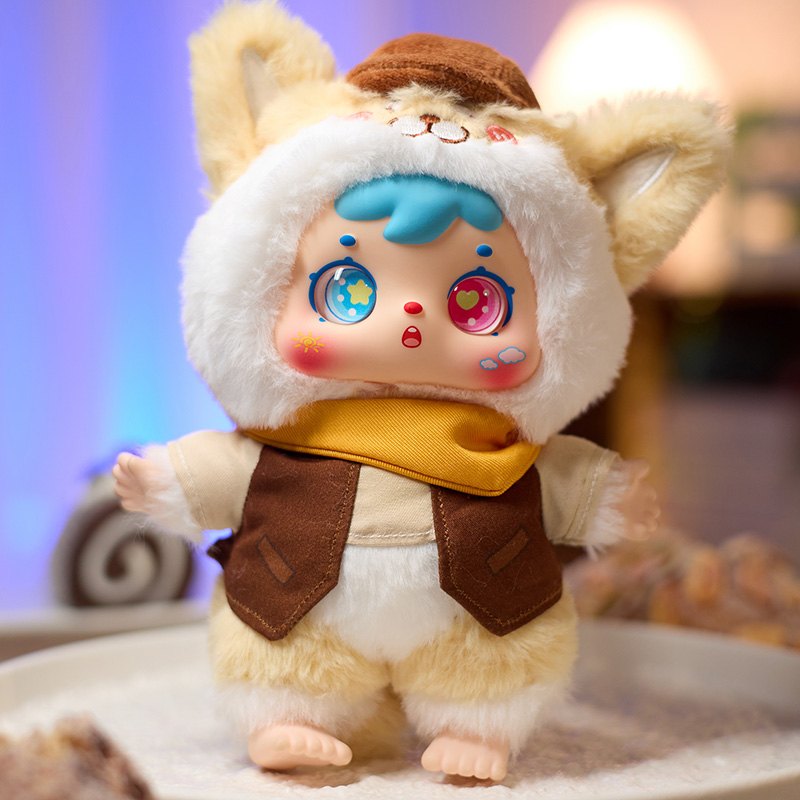
The main risk with plush is consistent quality of all characters in an order, not just the first 3 items in the order. A character should look the same in box #3 as it does in box #300. This is checked at the sewing and stuffing stations where uneven fill or loose seams will be visible. Final inspection with AQL sampling is used to verify consistent quality.
Minimum Orders and Customization
What MOQ Looks Like in Practice
The minimum order quantity for our plush blind boxes depends on the degree of production complexity of the product. Simple characters with a molded vinyl face tend to have the lower minimums, while characters with movable parts or accessories have the higher minimums. Typically, most production facilities work with minimum custom production runs of 1,000 to 3,000 units, depending on the character design.
This number is to be used as a planning figure and not as a quotation. Minimum order quantities for your products will be advised once design, materials and packaging have been finalized.
OEM versus ODM
We make a distinction between our OEM designs and our ODM designs. Both will be of high quality and made for your use. However, in our OEM character designs you create the character and we make it for you in your program as you have designed it for your brand and packaging. In our ODM character designs we create the character and you can then sell this line of characters possibly even under your own label.
OEM is suitable when you already own an IP and want the product manufactured to your specifications. ODM designs allow you to pick from an existing range of designs or even from designs that your suppliers have already come up with. ODM can provide a faster route to market when you choose from existing or supplier-developed designs. Often buyers will use the ODM route as a stepping stone to full custom OEM designs, to test the market with a near off the shelf design first.
Reading the Carton
Box Sizes and Carton Quantities
Items like blind boxes are shipped in cartons. These cartons are typically made to fit the individual blind box. Our plush blind box products typically range from approximately 11 to 31 cm in size. Knowing how many of the blind boxes are in a carton helps to ensure adequate space on store shelves and in shipping containers for the pendant blind boxes and other blind box items. The number of blind boxes in a carton can range from a few large ones to hundreds of small ones.
Packing for Blind Box Integrity
Blind boxes need to arrive at customers’ homes sealed up and unopened – that’s the surprise of the product. In order to guarantee the safety of the figures in the inner packaging on the way to the customers, the outer packaging has to be sealed when it leaves us. When opened by the customers at home, the seal should come off easily. Protective inner packaging and suitable carton strength should also prevent the plush from being crushed or damaged during transport.
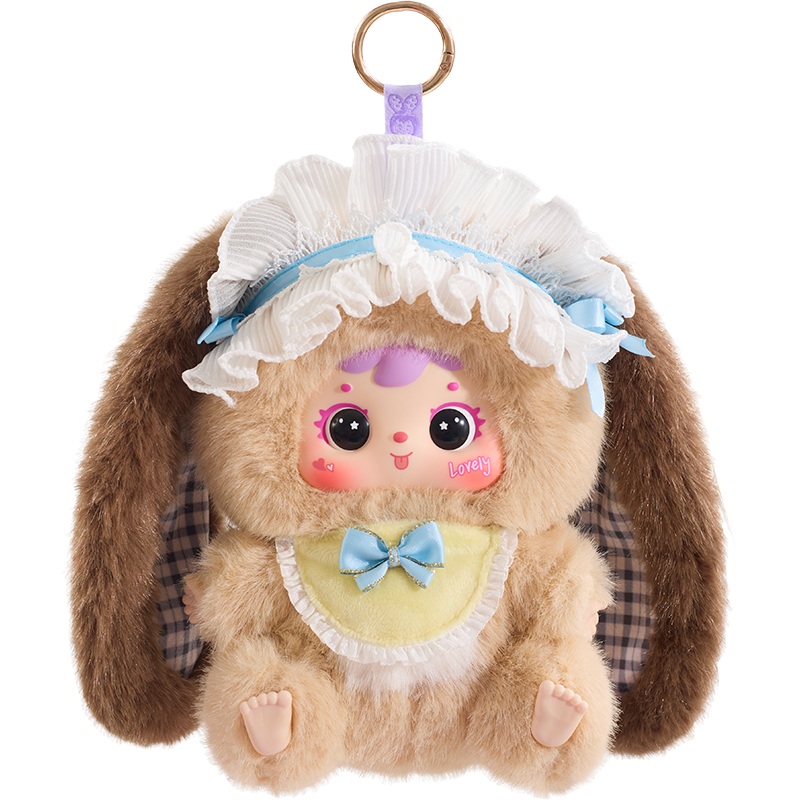
Our factory regards the seal to this product as a feature. Thus the 680% Rabbit Elf is packed with care in protective packaging so that the vinyl face and the plush body of this item will reach you clean after a long sea journey.
Why Plush, and Where Samuel Fits
We should look to source plush products over vinyl when the product concept allows for additional uses i.e. bag charm, keyring, phone strap etc. This would allow for additional use cases outside of the static vinyl shelf figure.
As for the Samuel factory listing, Zhejiang Meiyiyou Craft Co., Ltd. was established in 2010. Their production base is based in Yiwu, Zhejiang Province, and they have a design and market office in Guangzhou. From initial design and sampling to bulk production, they can complete the entire production process. Their large production area of over 20,000 square meters and more than 200 workers supply to many domestic and international retail channels. Products are based on the original kawaii-animal IP and are made of plush with a molded face. There are small pendants as well as large collectible figures.
Conclusion
Sourcing blind boxes from China as plush is not about finding the lowest price. Instead you verify the craftsmanship, verify the required compliance, verify auditable quality control and verify a minimum order quantity that equals your first run so you can re-order confidently. Contact Samuel and he’ll ring you to discuss quantities and compliance requirements and present you with a realistic sample-to-production lead time.
FAQ
Q: What is the minimum order for plush blind boxes from a Chinese factory?
The number of units for a custom plush blind box production can vary from 1,000 to 3,000 pieces depending on the design, materials and packaging complexity. A simple plush character with a molded vinyl face would be on the lower end of this range. A plush character with parts that can be moved and/or accessories would be on the higher end of this range. The number of units depends on the final design for the plush character and the packaging.
Q: Which safety and compliance requirements apply to plush blind boxes?
Requirements vary by market. In China, applicable GB 6675 standards and, where required, CCC requirements apply. In the EU, toys must meet applicable EU toy safety requirements and carry the CE marking. In the US, applicable CPSC requirements apply, including ASTM F963 where relevant, with a CPC required for covered children’s products. In Australia, products must comply with the applicable mandatory toy safety standards.
ISO 9001 is a quality management system certification and does not by itself demonstrate product safety compliance. BSCI and SMETA are social compliance audits or assessment programs of bigger retail buyers. They are not toy safety certifications. Request the relevant product test reports and corresponding compliance documents, especially in relation to chemicals like heavy metals, lead and phthalates.
Q: How do I verify quality before placing a large order?
Make sure a sample goes through at least two rounds of checking molded-face seam, filling and colors before placing an order where necessary. In production, a final AQL-sampled inspection before shipment is commonly used to verify the quality of the finished goods. On top of that we like to receive a pre-shipment QC report. For larger or higher-risk blind box orders third-party inspection is common practice. A decent manufacturer won’t have any problem with that.
Q: Can I customize the packaging and add my own brand?
Yes. For OEM, we produce the figurine according to the supplied character. Retail packaging and carton artwork can be produced to match your brand. For ODM products we supply you with an existing product line or supplier developed products that can be customized to your requirements within agreed upon scope of customization. Brand labels, carton printing and design of the blind-box seal are customized and approved at sample stage.

Post Comment