


Material determines surprisingly many of the logistics after a blind box leaves the factory floor. Material choice affects shelf appeal, freight cost, the applicable compliance documentation, and whether shoppers are likely to pick up the box in store.We’re not talking about choice between plush or vinyl for a boutique to make what will be the future collectibles. It is a merchandising decision.
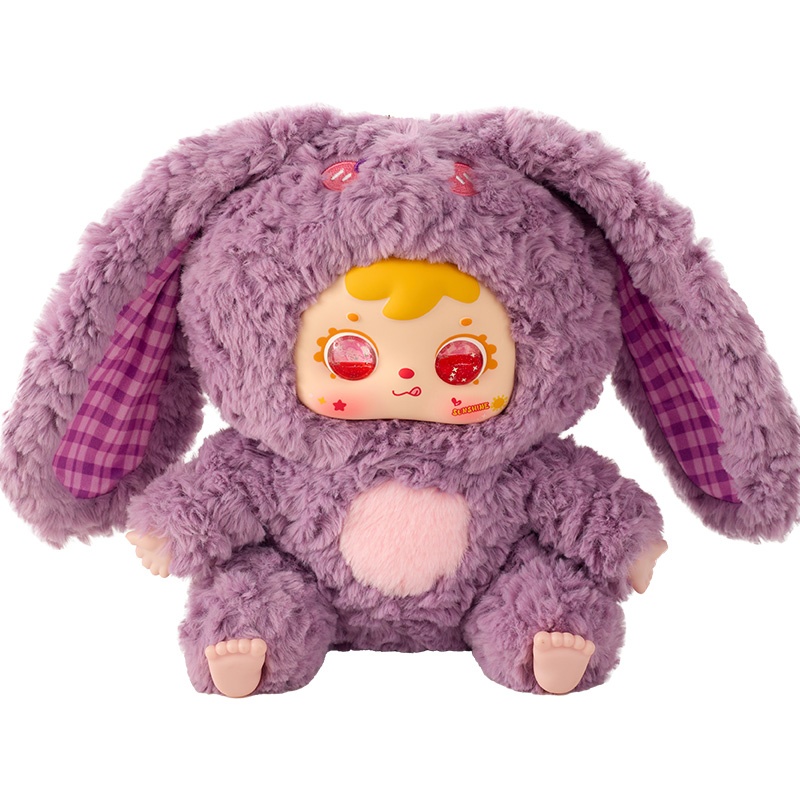
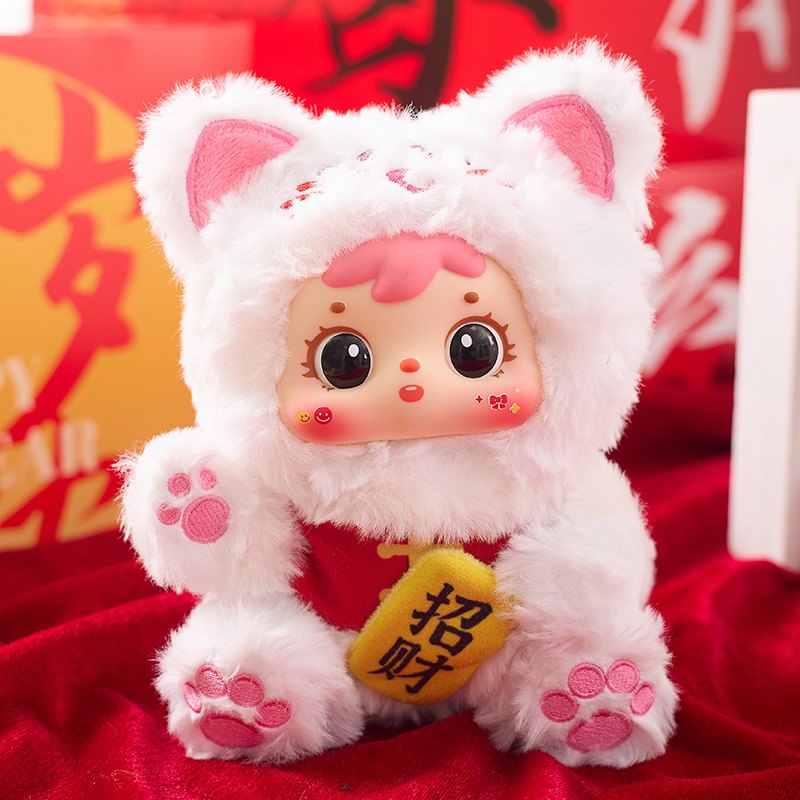
Most of the time those two materials have different jobs. So you get a nice, display-first figure with Vinyl. Plush provides shoppers something they can touch, give and tote in a bag. Samuel is on the plush side of things, combining a molded ABS head with a soft polyester-plush body; with our guide to who wins where (in materials), you can match it up before your order.
How the Two Materials Actually Differ
The difference shows up first in how the pieces are made, and then in how they behave on your shelf.
Construction and finish
A vinyl figure may use more than one material and forming step. The shell may be molded in one or more pieces and is then painted and detailed. This leaves you with a stiff object, defined by crisp contours of paint. Plush construction is assembled. The micro plush or rabbit fur panels are computer cut and sewn together, stuffed with eco PP cotton or weighted polyester granules so the piece can stand on a shelf, topped off with a molded ABS face which contains the eyes and expression. You have 2 separate production lines, each with a different QC checklist and failure modes.
Hand feel and durability
Vinyl reads as an object. That it is hard, true and more at home on a shelf or in some sort of display case. Its surface, a scratched edge or scuffed base, docents visible age to younger figures. Plush reads as a companion. The soft body soaks up handling, and light use disappears within the fabric. In plush work, fine threads and minor color variation may fall within agreed QC tolerances. The reality is that facing endless picking in a store environment, plush tends to age better.
You can compare the material families side by side in the plush blind boxes catalog on the Samuel site.
What Sells Better on Your Shelf
The student and young-adult segment
The run-down of what constitutes the core blind-box buyer in industry reports is a young, female shopper who buys entry-level pieces and then collects over time. That profile fits plush well. That soft body, the pastel colorways and the animal figures speak to a first purchase collector – or impulse buyer — while keeping per-box size small for shoppers via an entry-level wholesale price band. Vinyl seems to attract a more dedicated over-the-shelf collector from day zero.
Gifting versus collecting
Vinyl drives completion behavior. Some sets include hidden figures with stated odds, encouraging shoppers to chase a full run. Plush makes gifting and everyday usage seamless. And that plush mascot is easier to hand off and quicker to carry, as well as an easy rationalization for a small gift. If your store relies on gift traffic, plush pulls in that traffic; if it lives or dies by collector loyalty then vinyl shields the shelf.
Wearability Changes the Merchandising Math
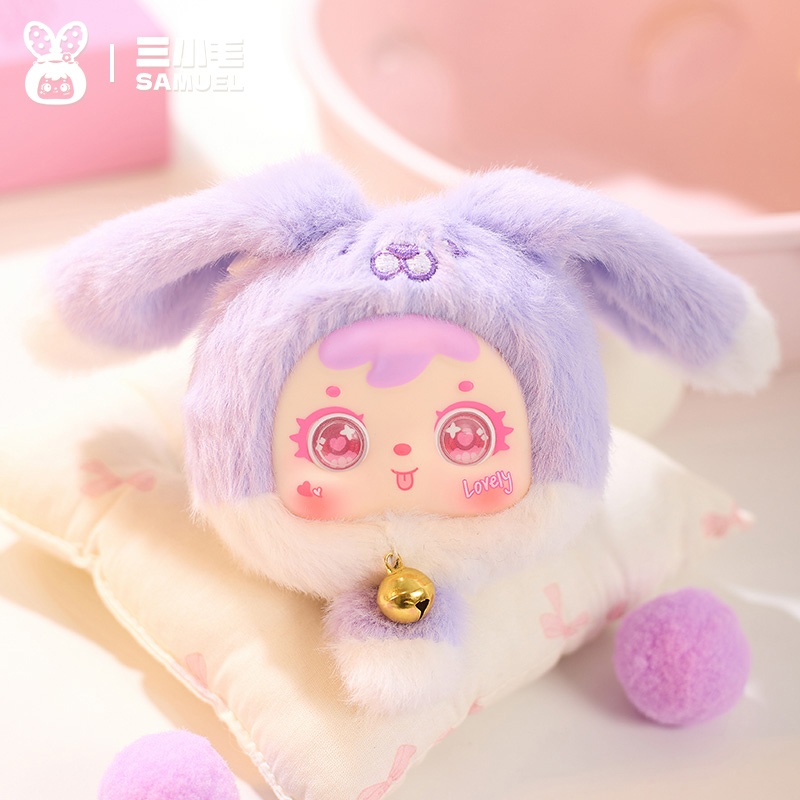
So this is the most straightforward structural difference between them. With a loop, hook or clasp and an endless number of plush characters — this one is easy to build but also doubles up as bag charm, phone strap or keychain in the box. Keep in mind mini pendant formats are 120 to 288 units per carton, so one SKU gets traffic in the toy aisle and accessory aisle. For a buyer, that means a single IP family can span pendant and both standard/oversized sizes — but they may need to license only one character line, depending on the agreement. Vinyl is often a display item — nothing about how it was made suggests that use will be rewarded.
Production, Pricing and Logistics for Wholesale Buyers
On the supply side, the material changes the order in three practical ways.
Minimum order and carton math
For plush lines, Samuel’s minimum order quantity (MOQ) is around 1,000 to 3,000 pieces depending on the complexity of a build. You know where carton density shows, such as standard plush blind boxes at 96 per carton, larger 400 percent figures at 36, and mini pendant formats at 120 to 288 per carton, depending on the SKU. Vinyl cartons can be heavier per unit; plush may take up more volume. Actual freight cost depends on the product size and packing.
Certifications and inspection
The material does not change the toy safety rules, but it may affect the test file. The plush body brings fabric and dye over the top of those hard bits, so in addition to mechanical parts testing, too—the file covers applicable tests for fabrics, dyes and plastic parts as well. Samuel’s plush lines sail into port with the standard compliance package; GB6675 and CCC where applicable for China, CE marking in EU territories and CPC documentation for applicable children’s products in a US market, AC for Australia, plus factory ISO 9001 accreditation along not to mention site BSCI & SMETA audits as well as final release batch inspection.
A Practical Comparison at a Glance
|
Dimension |
Plush blind box |
Vinyl blind box |
|---|---|---|
|
Construction |
Sewn micro plush panels, PP cotton or weighted granule fill, molded ABS face |
Molded rigid body, painted detail |
|
Hand feel |
Soft, huggable, travel-friendly |
Hard, display-first |
|
Wearable uses |
Bag charms, phone straps, keychains |
Mainly display; some accessories |
|
Aging in store |
Light wear hides in the fabric |
Scratches show on the surface |
|
Carton density |
96 standard / 36 large / 120–288 mini (depending on SKU) |
Depends on size and packing |
|
Best fit |
Gifting, impulse and accessory traffic |
Completion sets, collector loyalty |
How Samuel Combines Both
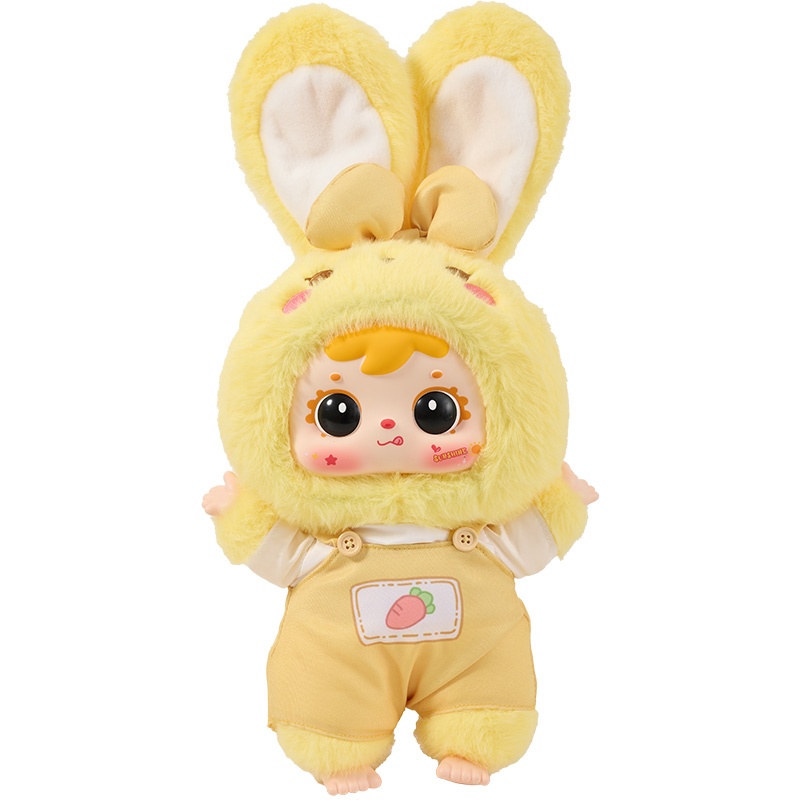
Samuel shows how its design takes the best of each material. The face, the first thing shoppers will focus on, is molded ABS — keeping expression and eyes sharp at pendant sizes! The body is plush: fluffy, pastel—made to be held. The range spans from the mini pendants to larger figures, and this 400 percent piece—the Crown Rabbit 400%—serves as an example of how those two materials read throughout one character.
At the rear of that range is Yiwu, Zhejiang-made factory: a ~20k meters-squared site home to 200+ staff running rotocasting, injection moulding CNC molds and computerized cutting + sewing/embroidery—all under one roof—plus design in Guangzhou. Established in 2010, Samuel produces plush and hard-parts toys for OEM (original equipment manufacturer) & ODM (original design manufacturer) programs shipping to Miniso, Sanfu, Pang Dong Lai as well as Kuleza among its retail partners.
Conclusion
Neither plush nor vinyl can ever claim to be the ultimate victor. Vinyl is the shelf collector’s medium: heavy, exacting, made to fill completionist gaps. Plush is the workhorse of the retailer: gift-able, wearable and price-pointed for entry-level turnover. If you work at a company where your shopper profile is young, gift-driven or accessory-minded then the molded ABS face of us designing a plush-led range gives you vinyl-level facial detail and plush handling all wrapped into one.
To talk through carton plans, MOQs or an OEM program for your market, contact Samuel with your target SKU list and destination market.
Frequently Asked Questions
Do plush blind boxes ship well for wholesale?
Yes. Plush is somewhat compressible and standard cartons of 96 units are space-efficient. The soft figures can withstand normal handling during transit, while the ABS face parts should be protected within normal export cartons.
Do plush boxes need the same safety certifications as vinyl?
Destination-market requirements are likewise similar — CE marking for the EU, CPC documentation for applicable children’s products in the US, GB 6675 for China, AC for Australia and applicable Australian toy safety requirements. For plush, the test file may be wider – hard-part tests plus applicable tests for fabric, dyes and plasticized materials.
Can a retailer mix plush and vinyl on one wall?
This is what most of the stores that are successful with blind boxes do. Vinyl is holding down the collector end of the wall, and plush has grabbed gift & accessory traffic right in that entry-level price band. Stock is also supported by the kind of product: plush sells best year-round, while vinyl performs strongest around set completions and new releases.
How do MOQs differ between plush and vinyl lines?
Both at Samuel are in the same quoted range, MOQ 1,000 – 3,000 pcs (where it is not materials but rather build complexity that sets exact amount). The exact MOQ depends on the design, including multi-part builds with a soft body and molded face.

Post Comment